
Houston construction moves fast. Ground breaks, phases shift, and the power demand at any given jobsite can change week to week as the project progresses from site prep to framing to finishing trades. Permanent utility connections rarely keep pace with that timeline, and waiting on the utility company is not a viable project management strategy when you’re running excavators, concrete pumps, and temporary lighting off the same circuit.
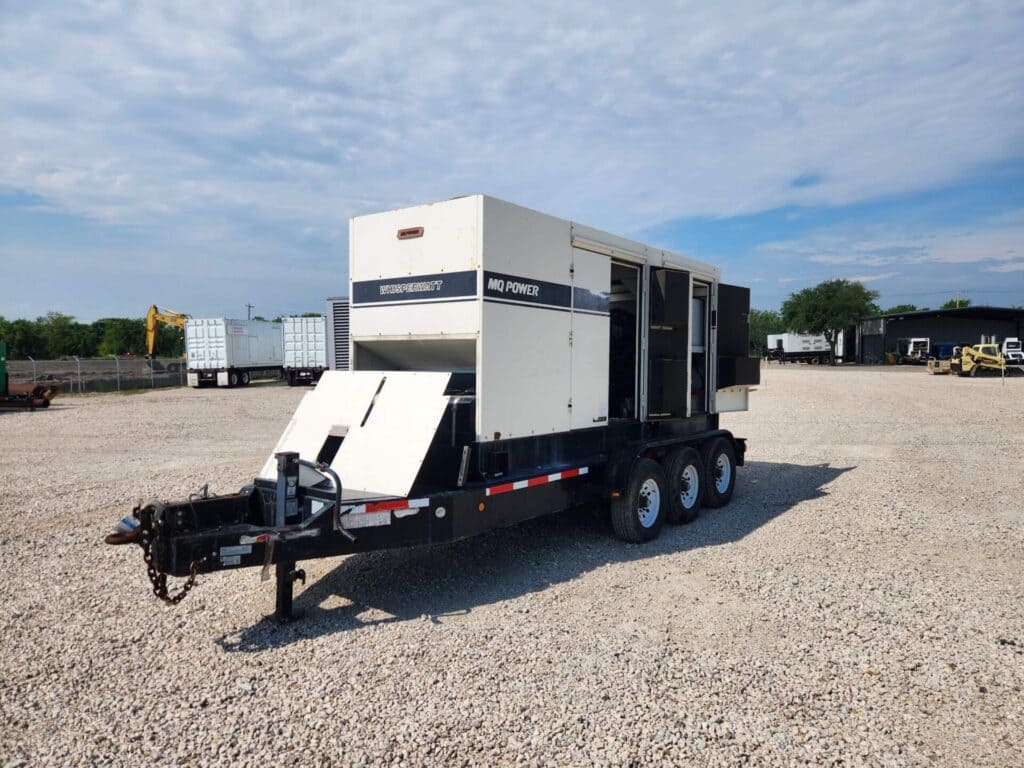
That’s where towable diesel generators earn their place on the jobsite. Not as a workaround, but as a deliberate part of temporary power planning. For construction managers and site superintendents working across greater Houston, trailer-mounted generator rentals offer a level of operational flexibility that stationary rental equipment simply can’t match — the same mobility advantage that makes towable units the standard choice for mobile cold storage and reefer trailer power applications.
Understanding why starts with how construction sites actually consume power and why the geography, climate, and pace of Houston projects make mobility a non-negotiable attribute in any temporary power setup.
Why Houston Construction Sites Have Unique Power Demands
Houston is one of the most active construction markets in the country. Industrial expansions along the Ship Channel, commercial development across the Energy Corridor, and dense residential build programs in surrounding suburbs all generate significant, sustained demand for temporary power. The sites are large, the schedules are aggressive, and the working conditions are extreme for most of the year.
Heat is the factor that changes every calculation. Summer temperatures regularly push into the mid-90s with humidity levels that stress both workers and equipment. Diesel generators running in those conditions need adequate airflow, proper load management, and the ability to be repositioned when site layout shifts or when a unit needs to come offline for service. A generator locked into a permanent pad position has no flexibility when the job changes around it. A towable unit can be relocated the same afternoon.
According to OSHA’s electrical safety standards for construction, temporary power installations must meet specific grounding, GFCI, and cord protection requirements at all times. Towable generator setups, when properly configured and positioned, make it easier to maintain those compliance standards as the jobsite evolves rather than retrofitting a fixed installation that no longer fits the site’s current state.
What Makes a Towable Generator Different From Standard Rental Units
The defining characteristic of a towable diesel generator is its trailer-mounted frame, which makes it DOT-compliant for road transport and easily repositioned using standard heavy equipment or a pickup with appropriate tow capacity. That portability is the feature that makes the difference in practice, but it’s not the only one.
Towable generators are also typically self-contained units. The diesel fuel tank, engine, alternator, and control panel are all integrated into the trailer frame, which means setup time is reduced and the number of separate components that need to be staged, secured, and connected is lower. On a Houston jobsite where ground conditions after rain can turn soft quickly, having a unit that can be moved and reset without heavy crane work matters.
Most towable units available through industrial generator rental in the Houston market run on diesel, which aligns well with the fuel logistics already in place on construction sites running heavy equipment. Diesel is stable in storage, widely available through commercial fuel services, and suited to the long run hours that construction phases often demand. There’s no gas line dependency, no propane tank coordination, just a fuel source the site is likely already managing.
Output capacity on trailer-mounted rentals spans a wide range. Depending on the application, construction sites typically pull from units in the 20 kW to 500 kW range, with the right sizing depending on what’s running simultaneously. Load banks, distribution panels, and accessories can extend a single generator’s reach across multiple work areas when the layout allows for it.
The Construction Phases Where Towable Generators Do the Most Work
Temporary power needs shift significantly across a construction project’s lifecycle. A towable generator that’s right for early site prep may not be the right fit for the electrical testing phase at project closeout. Understanding which phases put the highest demand on temporary power helps project managers plan rental timing and sizing more accurately.
| Construction Phase | Primary Power Loads | Generator Considerations |
|---|---|---|
| Site Preparation | Lighting, water pumps, small power tools | Lower kW demand; mobility matters as work moves across the site |
| Foundation and Concrete Work | Concrete vibrators, pumps, curing equipment, lighting | Higher sustained loads; fuel consumption increases |
| Structural Framing | Welding equipment, saws, compressors, hoisting | Intermittent high-load spikes; sizing for peak demand critical |
| MEP Rough-In | Power tools, temporary lighting, HVAC testing | Multiple trade crews running simultaneously; distribution planning needed |
| Finishing and Closeout | Lighting, testing equipment, punch list tools | Lower kW demand; single unit often sufficient for remaining work |
Matching the generator to the phase prevents both undersizing, which leads to voltage sag and equipment damage, and oversizing, which wastes fuel and increases rental cost unnecessarily. A generator sizing calculator can help establish the right kW range before equipment gets deployed to the site. For a broader look at site power planning across a project’s full lifecycle, see our construction site generator rental guide.
Houston’s Climate and What It Means for Diesel Generator Deployment
Operating diesel generators in Houston’s summer heat is not the same as operating them in moderate climates. Ambient temperature directly affects engine cooling efficiency, and a unit running at full load in 95-degree heat with high humidity is working harder than the same unit under test conditions. Derating, the reduction in available output as ambient temperature rises, is a real factor that should be accounted for when sizing a rental unit for a Houston jobsite.
As a general rule, diesel generators begin to derate at temperatures above 77°F, and the output reduction increases as heat climbs. On a Houston construction site in July, a 150 kW unit operating under heavy load may deliver closer to 130 to 140 kW of usable power depending on the specific unit, ventilation conditions, and fuel quality. Experienced rental partners factor this into their sizing recommendations rather than sizing to nameplate capacity alone.
Beyond heat, Houston’s storm season introduces a separate planning variable. Tropical systems can disrupt construction timelines and utility infrastructure simultaneously, leaving active jobsites without grid power for days. A towable generator positioned on-site before a system makes landfall gives the project team the ability to maintain security lighting, operate pumps to manage site flooding, and protect temperature-sensitive materials. For sites near the coast or in low-lying areas, pairing a solid hurricane power preparedness plan with an emergency generator rental on standby is part of responsible site planning, not just emergency reaction.
Positioning and Site Layout Considerations for Towable Units
Where a generator sits on a construction site affects everything from cable run length to noise exposure for workers to exhaust ventilation. Towable generators provide an advantage here because their placement isn’t permanent, but that flexibility still requires deliberate planning at the start of each project phase.
A few positioning principles that hold across most Houston construction sites:
- Position the generator upwind of primary work areas when possible to direct exhaust away from crews and enclosed spaces
- Keep the unit on stable, level ground — soft fill and recent concrete pour areas are poor staging locations after rain
- Maintain clearance on all sides for ventilation and service access, particularly in Houston’s summer heat when cooling airflow matters most
- Plan cable runs to minimize trip hazards and protect conductors from equipment traffic, as OSHA requires adequate cord protection and grounding on all temporary construction power installations
- Coordinate fuel delivery logistics before the unit is deployed, particularly on high-security or access-controlled jobsites
Repositioning the generator mid-project is normal and often necessary as the site layout evolves. Towable units make that transition manageable without crane rental or structural modification to a fixed installation.
Fuel Planning and Runtime Expectations on Houston Jobsites
Diesel consumption on a construction site depends on load, ambient temperature, and runtime hours. A 100 kW diesel generator running at 75% load will consume roughly 7 gallons of diesel per hour under normal conditions, and that figure climbs slightly as temperature increases. For a jobsite running a generator 10 hours per day, six days a week, fuel planning becomes a genuine logistics task.
On Houston construction projects, commercial fuel delivery is typically the most practical approach. Bulk diesel can be scheduled for regular delivery, and on-site fuel storage tanks, often available as accessories through the same rental provider, reduce the risk of an unplanned shutdown from fuel exhaustion. Planning fuel inventory for the peak load phases of a project, not just average consumption, prevents the kind of mid-pour or mid-lift outage that costs time and damages completed work.
For a more detailed breakdown of diesel consumption at different load levels and generator sizes, the generator fuel consumption guide covers the full range of scenarios relevant to industrial and construction applications.
Getting the Rental Setup Right Before the Job Starts
The most preventable temporary power problems on construction sites are the ones that result from treating the generator as an afterthought. When rental planning happens in parallel with the project schedule, not after the utility connection falls through, the deployment goes smoother, the sizing is right, and the team isn’t scrambling the week before a critical pour.
Before requesting a towable generator rental for a Houston construction site, it helps to have a clear picture of a few operational details:
- Which trades will be running simultaneously during the peak load phase of the project
- Whether a single centrally-positioned unit or multiple smaller units distributed across the site better fits the layout
- How many daily runtime hours the generator will need to sustain and for how many weeks
- What the site’s fuel delivery access looks like and whether on-site storage is needed
- Whether the project schedule includes any phases where power demand drops significantly, allowing for a smaller or differently configured rental
A towable diesel generator isn’t the right answer for every application, but for Houston construction sites managing complex timelines, shifting layouts, and heat-intensive operating conditions, the mobility and operational flexibility it provides are hard to replace with any fixed alternative. If you’re planning temporary power for an upcoming project or need a rental setup that can keep pace with a fast-moving construction schedule, Stag Power Rentals can help you work through the right configuration. Request a quote to get started.
