Severe weather patterns along the Gulf Coast continue to disrupt power infrastructure, leaving commercial facilities exposed to downtime, data loss, and operational shutdowns. In Houston, where hurricane activity and flooding risks remain persistent, backup energy planning is treated as a structured operational requirement rather than a reactive decision. Diesel generator systems are frequently deployed as part of a broader hurricane contingency plan, ensuring that critical systems remain active when grid power fails.
Power continuity is often determined by depth of preparation, response speed, and equipment reliability. Businesses that align with scalable storm power solutions tend to maintain operational stability even during extended outages.
Hurricane Risk Exposure Across Houston Commercial Infrastructure
Houston’s geographic position near the Gulf Coast places commercial and industrial operations within a high-risk hurricane corridor. The National Hurricane Center tracks Gulf Coast storm activity that regularly impacts substations, transmission lines, and localized distribution systems through storm surges, heavy rainfall, and high winds.
Facilities commonly affected include:
- Petrochemical and refining plants
- Healthcare facilities and emergency centers
- Data centers and IT infrastructure hubs
- Construction and industrial job sites
- Warehousing and logistics operations
- Emergency response and disaster recovery operations
Power disruption in these sectors often results in halted production, safety concerns, and financial losses. A structured hurricane contingency plan integrates backup power systems with risk forecasting and operational prioritization.
Diesel Generator Rental As A Strategic Storm Power Asset
Diesel generators remain widely used for storm response because they can support high-load commercial and industrial applications with planned fuel logistics. When a storm has already made landfall and utility power is out, emergency diesel generator rental support helps Houston and Gulf Coast facilities coordinate temporary power capacity, load requirements, cabling, distribution equipment, fuel planning, and deployment details.
Hurricane diesel generator rental Houston services are typically configured to support:
- Prime power during prolonged outages
- Standby backup for critical systems
- Load sharing across multiple units
- Temporary power during infrastructure repair
Rental fleets ranging from 20 kW to 2000 kW are commonly utilized to match varying operational demands. Equipment selection is influenced by load calculations, redundancy requirements, and site conditions.
Key Components Of A Structured Hurricane Contingency Plan
A well-defined hurricane contingency plan is structured around preparedness, response, and recovery phases. Power continuity is embedded within each phase through technical planning and logistical coordination. Business continuity guidance from federal emergency management agencies also reinforces the importance of pre-storm power planning, as seen in this chart below.
| Phase | Power Planning Focus |
| Preparedness | Load assessment, generator sizing, fuel logistics, and site inspection |
| Response | Rapid deployment, system integration, and real-time monitoring |
| Recovery | Extended runtime support, maintenance, and demobilization |
Each phase is supported by clear communication channels and predefined escalation protocols. Businesses that formalize these stages tend to reduce downtime significantly.
Generator Sizing And Load Management Considerations
Accurate generator sizing is required to prevent overload, inefficiency, or system instability. Load demand is typically calculated based on critical versus non-critical equipment.
Key technical factors include:
- Starting wattage and running wattage requirements
- Voltage and phase configuration
- Power factor and load distribution
- Redundancy planning through parallel generators
Load banks and testing procedures are often used to validate performance before storm impact. Oversizing may lead to inefficient fuel consumption, while undersizing increases the risk of system failure. The power calculator can assist in estimating accurate load requirements for specific operations.
Fuel Logistics And Continuous Power Availability
Fuel supply continuity is a central component of storm power solutions. Diesel generators require structured refueling strategies, especially during extended outages when supply chains may be disrupted.
Common fuel planning elements include:
- On-site fuel storage capacity
- Scheduled refueling contracts
- Fuel polishing and contamination prevention
- Monitoring consumption rates based on load
Fuel management systems are often integrated with remote monitoring tools to track runtime and efficiency. Businesses that secure fuel logistics in advance reduce dependency on unstable post-storm supply conditions. The EPA’s emergency power systems guidance outlines environmental considerations relevant to on-site diesel fuel storage and generator operation.
Deployment Speed And Site Readiness Requirements
Response time is directly linked to operational continuity. Generator deployment during hurricane events requires pre-configured logistics, transportation planning, and site readiness. For facilities that need immediate reactive power — after an outage has already begun — emergency generator rental with same-day dispatch is available across Houston, Galveston, Pasadena, and the broader Gulf Coast corridor. For situations requiring power on-site within hours, see our 24-hour emergency response capabilities.
Site preparation typically includes:
- Designated placement areas with proper ventilation
- Ground stability and flood risk assessment
- Cable routing and distribution setup
- Compliance with local safety regulations
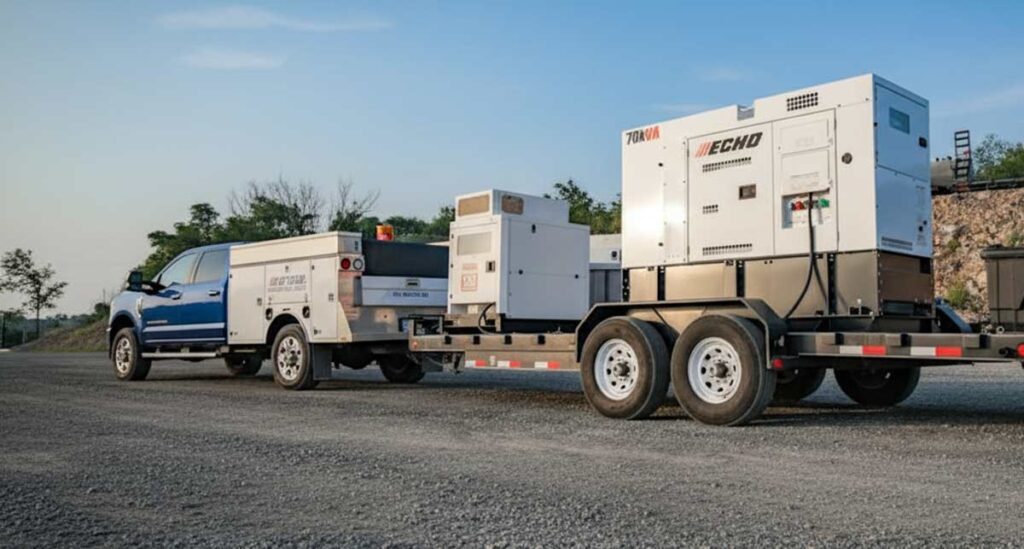
Trailer-mounted generators and modular systems are often utilized to accelerate installation. Quick-connect systems and pre-installed transfer switches further reduce downtime during activation. OSHA emergency preparedness guidelines also address safe generator placement and ventilation requirements for commercial facilities.
Industry Applications Of Storm Power Solutions
Different industries apply storm power solutions based on operational sensitivity and risk tolerance. Diesel generator rentals are adapted to meet sector-specific requirements.
- Healthcare systems prioritize life-support equipment and emergency lighting
- Construction sites maintain equipment operation and safety systems
- Data centers protect servers and prevent data corruption
- Manufacturing facilities avoid production losses and equipment damage
- Commercial buildings sustain HVAC, elevators, and security systems
Each application requires tailored load distribution and contingency layering to ensure uninterrupted performance.
STAG Power Rentals Delivers Reliable Storm Power Across Houston
STAG Power Rentals provides scalable hurricane diesel generator rental Houston services designed to support commercial and industrial operations across the Gulf Coast. A fleet ranging from 20 kW to 2000 kW is available to meet diverse load requirements, from small business continuity to large-scale industrial demand.
- Fast deployment with delivery often available within one day, based on inventory
- Service coverage across Houston, Pasadena, Baytown, Sugar Land, Katy, The Woodlands, Conroe, and the Gulf Coast regions
- Flexible rental options, including single shift, double shift, and continuous 24-hour operation
- Comprehensive power distribution equipment, such as cables, transformers, and panels
- Emergency generator rental for hurricane and flood-related outages
- Structured hurricane contingency plan support from preparation through recovery
Businesses seeking dependable storm power solutions often rely on STAG Power Rentals to maintain operational continuity, reduce downtime, and stabilize infrastructure during extreme weather events.
Request a quote today from our generator technicians to secure reliable backup power before the next storm impacts your operations.
