
When a hurricane clears Houston, the storm is not the last threat to operations. The real problem arrives in the hours and days that follow. Grid restoration on the Gulf Coast can take anywhere from 72 hours to two weeks after a major storm, depending on infrastructure damage, crew availability, and the scale of outages across the region. Businesses waiting for utility power to return are not open. They are not generating revenue, filling orders, or serving customers. The gap between “storm passed” and “power restored” is where recovery costs accumulate.
A rental diesel generator closes that gap immediately. Rather than waiting for grid infrastructure to be repaired zone by zone, facilities that deploy emergency generator rentals can bring critical systems back online within hours of storm clearance and begin recovery on their own schedule.
Why Grid Restoration Timelines Work Against Businesses
After a major hurricane, Houston’s grid restoration is a large-scale infrastructure project, not a quick repair. CenterPoint Energy operates across more than 5,000 square miles of service territory. When Hurricane Beryl made landfall in July 2024 as a Category 1 storm, more than 2.2 million customers across the Houston region lost power, with some facilities waiting over a week for restoration. That was not an extraordinary storm. It was a modest event that exposed how little margin exists between normal operations and extended outages along the Gulf Coast.
Restoration priority follows a predictable sequence. Transmission lines feeding hospitals, water treatment plants, and major substations are addressed first. Commercial corridors, industrial zones, and manufacturing districts often wait well behind critical infrastructure. A warehouse in Pasadena or a distribution facility in Texas City may not receive power until days after residential neighborhoods elsewhere have already come back online.
Businesses that deploy a rental generator do not need to track restoration timelines or wait on a utility crew schedule. They establish their own power supply, independent of the grid, and begin recovery as soon as the storm clears and safe facility access is possible.
What a Rental Generator Actually Replaces During Recovery
A diesel generator rental during hurricane recovery is not simply a backup to keep the lights on. For most commercial and industrial operations, it replaces the utility feed entirely for a defined recovery period.
Depending on facility type and load requirements, a properly sized unit supplies power to the following systems:
- HVAC systems needed to manage temperature-sensitive inventory or protect personnel returning to the facility
- Refrigeration units in food service operations, cold storage warehouses, and pharmaceutical storage
- Production machinery, assembly lines, and processing equipment
- IT infrastructure including servers, network equipment, and point-of-sale systems
- Security and access control systems
- Lighting needed for safe inspection, cleanup, and reopening operations
The generator connects to existing electrical distribution through ATS (Automatic Transfer Switch) integration, supplying the facility at the same amperage and voltage it would normally draw from the grid. This allows staff to operate largely as normal while waiting for utility restoration.
Which Operations Face the Greatest Risk Without Immediate Power
Not every business faces the same recovery risk. Operations that depend on temperature control, continuous processes, or data availability have the narrowest tolerance window after a hurricane. FEMA’s Ready Business program specifically identifies power outage continuity planning as a core requirement for any business hurricane preparedness strategy.
Cold chain operations face the most immediate exposure. Grocery distribution centers, seafood processors along the Gulf Coast, medical cold storage facilities, and restaurant supply warehouses can lose entire inventory runs within 24 to 48 hours without refrigeration. A generator sized to carry the full refrigeration load eliminates that exposure entirely and preserves inventory that may be difficult to replace quickly after a regional storm.
Manufacturing plants and industrial facilities face a different problem. Restarting a dormant production line after days of downtime takes additional hours beyond power restoration itself. Every day of lost production is a day of delayed revenue and potential contract penalties. Bringing a rental generator online shortens the restart window significantly and allows maintenance teams to begin equipment checks and process restarts on their own schedule rather than waiting for the grid.
Data centers and telecom facilities in the Houston area often have permanent standby generators as part of their standard infrastructure. But when that equipment sustains storm damage or fuel supply is disrupted, a rental unit in the 500kW to 2,000kW range bridges the gap until the primary system is back online. Healthcare facilities, assisted living centers, and clinics operate under NFPA 110 requirements to maintain power continuity, making rental generators a compliance requirement rather than an optional measure for operations without permanent standby infrastructure.
Generator Sizing in Post-Hurricane Recovery Scenarios
Selecting the right generator size depends on the facility’s actual load, not a rough estimate. Undersized units trip under load or fail to carry all critical systems. Oversized units waste fuel and add unnecessary cost during a period when cash flow is already strained. The table below provides general guidance for common recovery applications.
| Facility Type | Estimated Load | Recommended Generator Range |
| Small retail or food service | 20–50 kW | 30kW–60kW |
| Mid-size commercial office or clinic | 50–150 kW | 100kW–150kW |
| Large grocery or cold storage warehouse | 200–500 kW | 250kW–500kW |
| Manufacturing or industrial plant | 500–1,500 kW | 600kW–1,500kW |
| Data center or critical infrastructure | 1,000–2,000 kW | 1,000kW–2,000kW |
Fuel supply planning is equally important for extended recovery deployments. A 500kW diesel generator running under sustained load consumes roughly 35 to 45 gallons per hour depending on the actual load percentage. Over a 48-hour deployment, that translates to well over 1,500 gallons of diesel. The diesel generator fuel consumption chart by kW rating and load level can help operations teams plan refueling intervals accurately before deployment. Coordinating fuel delivery as part of the rental agreement prevents supply interruptions mid-recovery, particularly after a storm when regional fuel availability may be constrained.
What the Deployment Process Looks Like
Understanding how a rental generator deployment actually works helps operations teams plan more accurately and set realistic reopening timelines.
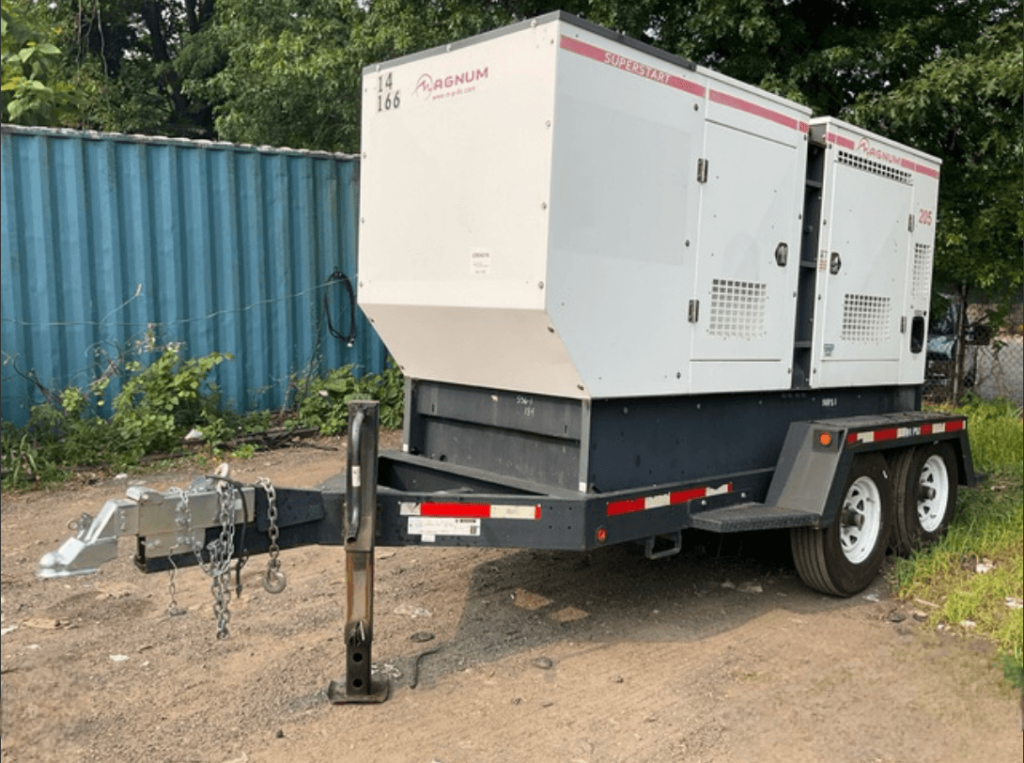
When a facility contacts a generator rental provider after a storm, the deployment follows a consistent sequence. The provider first confirms generator type, size, and availability. Trailer-mounted units are preferred for same-day emergency deployments because they arrive ready to connect without requiring cranes or significant site preparation.
Delivery and positioning are handled by the provider’s crew. Generator placement accounts for fuel access, exhaust clearance, and proximity to the facility’s main electrical connection point. The delivery team manages load connection and ATS integration. Pre-connection testing confirms the unit is operating at correct voltage and frequency before the load is transferred. Running a cold generator directly into a full facility load without testing is a common mistake that creates voltage instability and can damage sensitive equipment.
For Houston-area operations, same-day deployment means a facility can realistically be back online within several hours of storm clearance, depending on road access and the complexity of the load connection. That speed is the difference between reopening on day one of recovery and joining the queue waiting for grid restoration.
The Economics of Renting Versus Owning During Recovery
Purchasing a permanent standby generator is a sound long-term strategy for facilities that need guaranteed power continuity year-round. But renting a generator during hurricane recovery serves a different purpose, and the financial case is different as well.
A purchase commits a facility to capital expenditure, ongoing maintenance contracts, fuel storage infrastructure, and annual compliance testing. During recovery, when cash flow is already strained and the duration of the power need is uncertain, that commitment is difficult to justify. Rental converts the power solution into a defined operating expense. The facility pays only for the period the generator is needed, which may be three days, two weeks, or somewhere between depending on how quickly the grid is restored.
There is no depreciation, no storage concern between storm seasons, and no maintenance obligation once the rental agreement ends. For facilities that face hurricane conditions every few years rather than every season, renting delivers the right solution at the right scale without the overhead of year-round ownership. The full cost comparison between renting and buying breaks this down further for operations evaluating both paths.
Reconnecting a facility after a storm also depends on getting the electrical setup right the first time, since a mismatched configuration can stall a restart just as easily as insufficient capacity. Our guide to choosing between single-phase and three-phase generator rentals covers that decision in detail. Facilities running mission-critical infrastructure, like data centers, face an even narrower margin for error, and sizing that kind of load correctly is covered separately in our breakdown of how to size a diesel generator for a data center.
Stag Power Rentals Deploys Across Houston and the Gulf Coast
Stag Power Rentals maintains a Gulf Coast-based fleet of diesel generators ranging from 20kW to 2,000kW, with same-day emergency deployment available across Houston, Pasadena, Baytown, Texas City, Galveston, Pearland, The Woodlands, and surrounding areas. Every unit is load-tested before it leaves. Each rental comes fully supported from delivery through recovery.
Standard service inclusions with every rental deployment include:
- Professional delivery, setup, and load connection
- ATS (Automatic Transfer Switch) integration support
- Fuel delivery coordination for extended recovery periods
- 24/7 on-call technical support throughout the rental
- Pre-delivery load testing and on-site monitoring
When a hurricane recovery timeline is measured in lost revenue by the hour, having a Gulf Coast-based provider ready to deploy immediately after storm clearance is the difference between reopening tomorrow and waiting on a utility crew schedule.
Contact us today to discuss your recovery power requirements before the next storm season arrives.
