
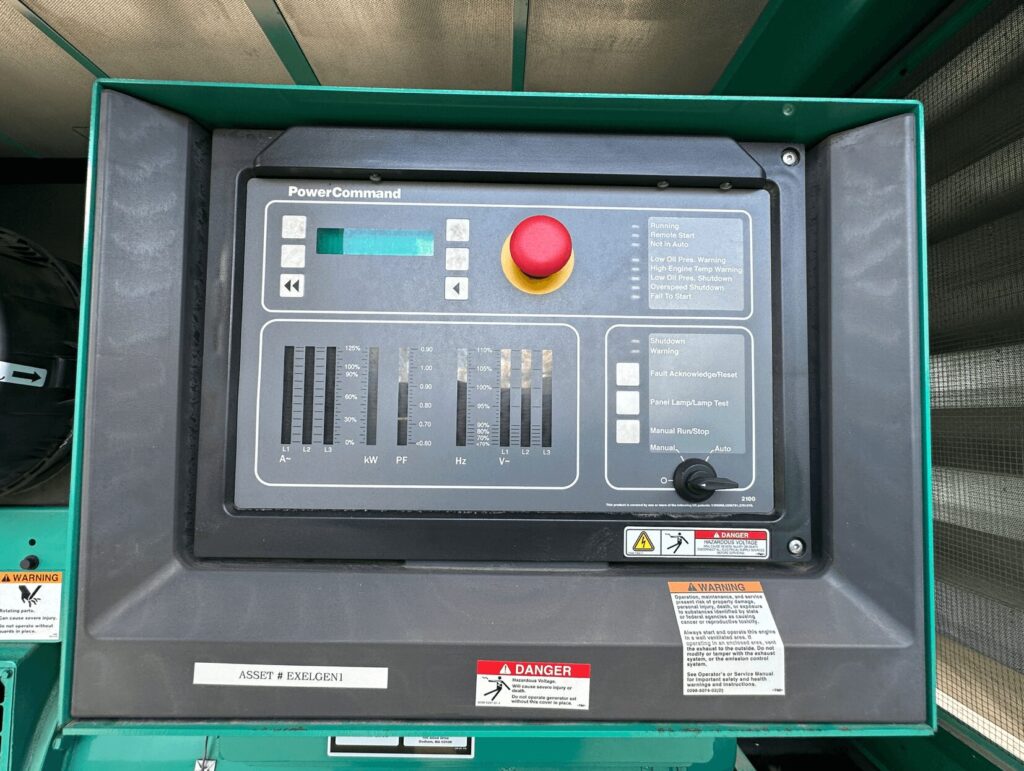
Sizing a commercial generator is much more reliable when you approach it as an electrical load calculation, not just a catalog comparison. Most sizing mistakes happen because startup loads are overlooked, power factor is ignored, or voltage and phase requirements are mixed between different pieces of equipment. A solid approach starts with creating a complete list of all loads, converting them into consistent units, and then adding a safety margin based on how the site actually operates. For a fast starting point, an industrial generator power calculator can help organize the numbers, while an industrial generator rental lineup provides real-world examples of the generator sizes commonly used on job sites and in commercial facilities.
Load Inventory That Matches Real Operations
A generator power calculator is only as accurate as the load inventory behind it. The inventory should reflect what runs together during normal operations, what must run during a contingency event, and what cycles on at startup. Separate “must-run” loads from “nice-to-have” loads early, since that decision changes both capacity and fuel planning.
Start by collecting nameplate data and operating notes from facility teams, electricians, and equipment manuals. When site conditions vary by season or shift, document the maximum credible operating case rather than an average day. Key operations to pay attention to include:
- Electrical identity: voltage, phase, frequency, and whether the load is single-phase or three-phase.
- Running demand: kW, amps, or watts at steady-state operation.
- Starting demand: motor starting method and estimated inrush or locked-rotor current.
- Duty profile: continuous, intermittent, cyclic, or standby-only runtime expectations.
- Priority group: life safety, process-critical, revenue-protecting, and discretionary loads.
If loads are commonly expressed in amperage rather than watts, an amperage-based approach can reduce transcription errors. The amperage chart resource is useful when teams are validating current draw against voltage and phase assumptions.
Power Units That Drive Sizing Decisions
Generator sizing depends on consistent units. Many systems mix watts, kilowatts, amps, and kVA, then treat them as interchangeable, which is where sizing errors show up. A reliable calculator workflow converts all loads into both kW (real power) and kVA (apparent power) because kVA often constrains alternators and switchgear.
Power factor (PF) is important because it relates kW and kVA. A lower PF increases kVA demand even when kW stays the same, which can push a generator into voltage regulation issues or thermal limits. Power factor relationships are commonly summarized in engineering references from IEEE materials. This IEEE-hosted reference on power factor terms provides a clear kW, kVA, and kVAR framing.
| Input type | What it represents | Common conversion note | Why it matters |
| kW | Real working power | kVA × PF = kW | Engine loading and fuel consumption planning |
| kVA | Apparent power | kW ÷ PF = kVA | Alternator thermal and voltage regulation limits |
| Amps | Current draw | Depends on voltage and phase | Cable sizing, breakers, and distribution equipment |
| Power factor | Ratio of real to apparent power | Often 0.8 to 1.0 in many site loads | Drives kVA requirement for the same kW demand |
Motor Starting and Surge Loads That Change The Answer
Motor starting is the most common reason a calculated generator size fails in the field. Motors can draw several times their running current during startup, and the generator must support that brief surge without an unacceptable voltage dip. The practical effect is that the “largest motor” often sets the minimum size even when the total running load looks modest.
Locked-rotor current and starting methods are typically shown on motor nameplates or in motor documentation. ABB’s motor nameplate overview summarizes locked-rotor code concepts and notes that across-the-line starting draws multiples of full-load current. ABB guidance on reading a NEMA motor nameplate is a helpful reference when interpreting code letters and starting behavior.
Introduce surge modeling with a structured approach so the calculator does not rely on guesswork. The following steps help estimate startup demand when exact values are not immediately available.
- Identify the largest motor that may start while other critical loads are already online.
- Confirm starting method: across-the-line, soft starter, VFD, wye-delta, or autotransformer.
- Estimate starting kVA using locked-rotor information or conservative multiples of running amps.
- Assume one major start event at a time unless process sequencing makes concurrent starts realistic.
- Apply a margin for voltage dip tolerance, especially on sensitive controls and IT loads.
Step-By-Step sizing Workflow Using A Calculator
A generator sizing guide should be repeatable and auditable. Decision-makers typically need to see how each assumption was selected and what risk remains if the load profile changes. A step-by-step method also makes it easier to update the calculation when equipment is added, removed, or re-sequenced.
The table below shows a simple load worksheet structure that works well with a generator power calculator. Use running watts for steady-state demand and starting watts for motor-driven equipment or compressors that surge on startup.
| Load item | Quantity | Running watts each | Starting watts each | Total running watts | Total starting watts |
| HVAC supply fan motor | 1 | 12000 | 48000 | 12000 | 48000 |
| Process pump motor | 2 | 9000 | 36000 | 18000 | 72000 |
| Lighting and receptacles | 1 | 7000 | 7000 | 7000 | 7000 |
| Controls and network equipment | 1 | 2000 | 2000 | 2000 | 2000 |
After the worksheet is complete, convert totals into kW and then check kVA using a realistic power factor. If three-phase distribution is involved, confirm that the voltage and phase match the equipment served to avoid hidden conversion errors. When the sizing exercise needs to be aligned with temporary power planning, consult this overview chart to help match capacity to deployment style.
Margins, Derating, and Site Constraints
A sizing result that exactly matches the calculated load is rarely a safe procurement target. Real sites introduce derating factors such as ambient temperature, altitude, ventilation limits, and transient step loads. A disciplined margin policy protects generator reliability and reduces nuisance trips, especially during startup sequences.
The most common sizing practice is to add headroom above the expected running load while also ensuring the unit can handle the highest credible starting event. In many cases, headroom is justified not as “extra capacity,” but as protection against voltage dip, harmonics, and future load additions.
- Operating headroom: keep typical steady-state loading below the maximum continuous rating to reduce thermal stress.
- Environmental derating: account for high heat, poor airflow, and high elevation impacts on engine output.
- Step-load tolerance: validate that large load steps do not cause unacceptable frequency or voltage deviation.
- Distribution limits: confirm cable, breaker, and connector ratings match expected current.
- Accessory requirements: plan for tanks, load banks, cable sets, and panels via generator accessories when deployment is temporary.
Use Case Checks Across Common Site Categories
Power requirements for generators vary by facility type because load composition and tolerance to power quality events differ. A sizing guide should include a “use case check” to confirm that the calculation fits the operational reality of the site. This check also helps determine whether redundancy, paralleling, or staged loading is the more cost-effective approach.
The examples below illustrate where sizing assumptions frequently change. Each category benefits from documenting what must remain energized, how quickly power must be restored, and which loads must be sequenced.
- Construction sites: motor-driven tools, welding, and staged equipment starts are typical. Site context often matches planning approaches described for construction power needs.
- Data centers: power quality sensitivity and transfer requirements often drive conservative margins. Critical load considerations align with data center support.
- Cold storage: compressor starts and temperature recovery loads can dominate the sizing result. Operational notes can be benchmarked against cold food storage facilities.
- Water districts: pump starting and seasonal runtime cycles are common drivers. Use-case considerations are similar to those summarized under water district operations.
Safety and Integration Checks That Protect The Plan
Sizing is not complete until integration and safety risks are addressed. Incorrect grounding, transfer equipment mismatches, and backfeed hazards can undermine otherwise correct capacity decisions. A generator plan should include verification steps that reflect applicable electrical codes, site safety standards, and equipment instructions.
Grounding and bonding requirements depend on configuration, transfer method, and whether the generator is treated as a separately derived system. OSHA provides a practical overview of generator grounding concepts and conditions where frames may serve as the grounding means. OSHA guidance on portable generator grounding is a useful baseline reference when teams are reviewing field deployment practices.
When grounding a portable generator, the following factors are key:
- Transfer method: confirm that an approved transfer switch or isolation method is used to avoid backfeeding.
- Neutral treatment: validate whether the neutral is switched and how bonding is handled for the application.
- Distribution layout: confirm feeder lengths, voltage drop expectations, and breaker coordination assumptions.
- Startup sequencing: document which loads start first and how delays are enforced.
- Fuel planning: confirm runtime requirements and refueling access, especially during extended events.
When contingency planning is part of the sizing decision, it is often helpful to align assumptions with an event-based response plan. The hurricane contingency power plan provides a structured way to translate risk scenarios into power and runtime requirements.
Right-Sized Generator Rentals with Clear Load Support
Stag Power Rentals supports generator selection by translating load data into a practical rental configuration that matches voltage, phase, distribution, and startup behavior. The goal is a sizing outcome that performs reliably during commissioning, startup sequencing, and changing site conditions, with documentation that remains useful when loads evolve. When the sizing exercise needs a fast path from worksheet to deployment, a review of the industrial generators available for rent can help narrow capacity ranges and deployment options.
The following steps are commonly used to keep sizing decisions defensible while reducing time lost to rework.
- Share a load list and operating scenario notes that clarify what must run together and what can be staged.
- Validate voltage and phase assumptions using site distribution details and planned connection points.
- Confirm accessory needs such as cables, connectors, and distribution panels through the accessories catalog.
- Align the final selection with a realistic margin policy that supports stable operation and expansion tolerance.
Talking with Stag’s technical team can be the quickest way to make sure you choose the right generator without paying for more capacity than you need. Through an industrial generator quote request, customers receive clear guidance on next steps and expert support that helps validate power requirements and build confidence in the final generator sizing recommendation. Contact us today to get help sizing the best generator for your needs.
