Generator rentals are widely used when utility power is unavailable, unreliable, or intentionally disconnected during scheduled electrical work. Temporary power may be required at industrial facilities, construction sites, commercial properties, or emergency response locations. In these situations, performance is influenced by load behavior, voltage requirements, runtime expectations, and connection methods rather than output alone.
Because several rental categories exist, evaluating the different types of generator rentals alongside generator price options allows power planning to remain aligned with real operational demands. When the rental type matches the electrical profile of the site, stable output and predictable operating costs are more commonly achieved. A strong starting point is often provided through regional industrial generator rentals pages and step-by-step rental guides explaining how generator rentals are arranged.
Key Power Factors That Drive Generator Selection
Generator sizing is often assumed to be a simple calculation, yet many sizing issues are caused by load characteristics rather than total kW demand. Resistive loads typically draw steady current, while inductive loads such as motors and pumps generate high inrush current during startup. Nonlinear loads, including variable frequency drives and UPS systems, can introduce harmonics that affect alternator performance and voltage regulation.
Before a selection is made between the available types of generator rentals, several technical elements are usually reviewed. These include:
- The required voltage and phase, such as single-phase or three-phase configurations
- The total connected load (measured in kW) and the apparent load (measured in kVA)
- The motor starting current and the largest anticipated load step
- Daily runtime and overall duty cycle
- Noise limitations and placement restrictions
- Emissions tier compliance on regulated job sites
- The connection method, including camlocks, lugs, or receptacles
When the current draw must be verified, load planning is often supported with an amperage chart and a sizing tool such as a power calculator. When duty cycles are long, fuel planning is commonly checked against a fuel consumption chart.
Safety requirements should also be reviewed during early planning. Portable generator safety and grounding expectations are explained in OSHA guidance, including a portable generator safety fact sheet and grounding guidance.
Portable and Inverter Generator Rental Options
Portable generator rentals are commonly selected when mobility and quick deployment are required. These units are often used at small job sites, temporary retail setups, or locations requiring limited tools and lighting power. Output is typically delivered through standard receptacles, and setup can often be completed without hardwired connections.
Inverter generator rentals are frequently used when sensitive electronics require a stable frequency and voltage. These units are designed to produce cleaner power with lower total harmonic distortion. Reduced sound levels are also commonly associated with inverter models, making them suitable for noise-sensitive locations where complaints and permit issues are more likely to be triggered.
Key considerations with these rental options include:
- Voltage drop caused by long extension cord runs and undersized conductors
- Ground fault protection requirements, especially on active job sites
- Parallel operation limitations where applicable
- Fuel handling steps, refueling frequency, and storage rules
Portable units are generally positioned at the lower end of generator price options, while inverter units may carry higher rates due to power quality and noise control features. However, total job cost is often shaped by refueling labor and cable management rather than the base rental rate alone. Household and small business safety reminders are also published by FEMA and USFA.
Towable Diesel Generator Rentals Across Multiple kW Ranges
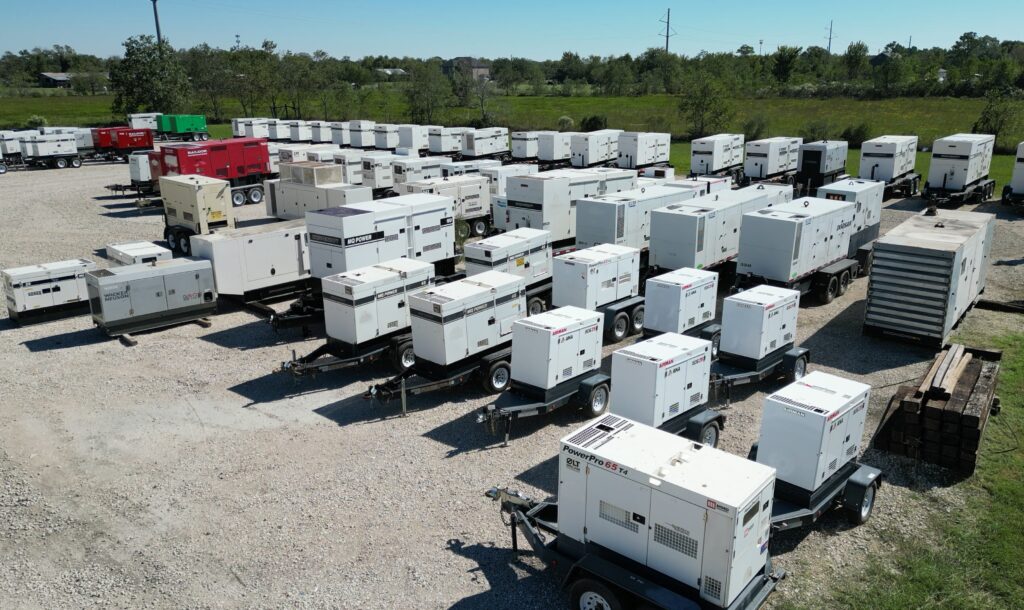
Towable diesel generator rentals are widely used across construction, industrial, and commercial power applications. Trailer-mounted configurations allow efficient transportation and placement, while diesel engines are commonly selected due to load response capability and steady runtime characteristics under variable demand. In many rental fleets, a broad range of capacities is offered so that small temporary power needs and large industrial loads can be supported with the same basic delivery model.
These units are frequently selected when:
- Three-phase power is required at higher voltages, such as 208Y/120V or 480Y/277V
- Large motor starts must be supported without nuisance trips
- An extended runtime is expected with onsite fuel planning
- Camlock connections and distribution equipment are planned
- Weather-resistant enclosures are required during outdoor operation
Digital controllers, voltage selector switches on certain models, and circuit protection systems are commonly included. Emissions-compliant engines are also frequently specified on regulated job sites. EPA background on Tier standards is published in its nonroad diesel rule materials.
Generator price options in this category are often influenced by capacity, runtime, and accessory requirements. When availability and coverage by region must be matched to a jobsite, location-specific pages are often referenced, including service coverage details such as Houston area generator rentals and broader coverage such as generator rentals across Texas. Equipment listings are also commonly reviewed through a dedicated inventory page, such as industrial generator equipment rentals.
Standby Diesel Generator Rental Systems
Standby diesel generator rentals are commonly requested when continuous power is required during outages or scheduled shutdowns. These systems are typically integrated with automatic transfer switches, allowing electrical loads to transition between utility and generator power without manual intervention. When critical loads must remain online, standby configurations are often selected because predictable switching and consistent output are expected.
Diesel-powered standby units are frequently selected in commercial and industrial environments due to fuel availability, load response capability, and compatibility with high-demand electrical systems. These generators are often used at facilities where downtime is not acceptable and where power stability must be maintained during utility interruptions. Emergency readiness content is often supported by pages focused on rapid response services such as emergency generator rentals.
Standby diesel generator rental setups often involve additional planning steps:
- Verification of load priority and critical circuits
- Automatic transfer switch sizing and configuration
- Grounding, bonding, and electrical clearance checks
- Startup testing and operational verification
Because transfer equipment and commissioning services are typically included, generator price options in standby diesel rentals are often structured as bundled packages rather than standalone equipment rates. Transfer switch fundamentals are also expanded through technical resources such as automatic transfer switch guidance.
Power Distribution Rentals That Complete Temporary Setup
Generators are rarely deployed without supporting power distribution equipment. Temporary power systems often require cabling, transformers, and distribution panels to deliver electricity safely across a site. When multiple endpoints must be powered, distribution gear is commonly used to reduce voltage drop, improve phase balancing, and support circuit protection at the point of use.
Common distribution components include:
- Camlock feeder cables sized by amperage and run length
- Step-down transformers to match site voltage requirements
- Distribution panels and I-Line boards to split loads into manageable circuits
- Spider boxes with circuit protection that can be used at job site endpoints
Proper distribution planning supports balanced phase loading and reduces nuisance trips. Distribution equipment also plays a role in overall generator price options, as correctly selected gear can prevent unnecessary generator upsizing. Accessory availability is commonly reviewed through an equipment hub, such as cable and accessory rentals, and a broader catalog page, such as industrial power rental equipment.
Industry-specific requirements can also influence distribution selections. Construction sites often require job-site protection and flexible layouts, while healthcare facilities typically require continuity planning and well-defined critical loads. Data environments may require stable switching plans and controlled loads.
Generator Price Options Shaped by Shift Billing and Scope
Rental pricing is typically influenced by runtime, logistics, and service requirements. Generator price options are commonly structured around daily, weekly, or monthly periods, then adjusted based on operational hours. When run time is intermittent, a smaller shift tier is often selected to keep costs aligned with actual use. When continuous power is required, higher-duty pricing is commonly applied because maintenance intervals and fuel handling requirements increase.
A shift billing structure is often applied in industrial rentals:
- Single shift covering standard workdays
- Double shift covering extended operations
- Triple shift covering continuous operation
Higher shift tiers reflect increased engine hours, maintenance intervals, and fuel consumption. Additional pricing factors often include delivery, setup, fuel service, accessories, and on-site technical support. A deeper breakdown of how pricing can be structured is provided through a detailed generator rental price discussion.
Cost control is often improved when the correct rental type is selected at the start. Oversizing is frequently avoided when load steps and starting amperage are verified, and distribution accessories are selected to match the real site layout. When severe weather risk is present, contingency scheduling can also be used to reduce response delays, including pre-planned approaches such as a hurricane contingency power plan.
Reliable Gulf Coast Power With Stag Power Rentals
Stag Power Rentals provides industrial generator rentals across Greater Houston and Gulf Coast communities, with diesel units ranging from 20 kW to 2000 kW. Support is commonly requested for planned maintenance, emergency backup during outages, and large-scale industrial operations where downtime is not acceptable.
Stag Power Rentals offers clients:
- Service coverage across Greater Houston and surrounding Gulf Coast communities
- Diesel generator fleet spanning 20 kW through 2000 kW
- Support aligned with planned maintenance, emergency backup, and contingency response needs
- Shift-based billing options matched to operating schedules
- Power distribution accessories available, including cables, transformers, I-Line panels, and spider boxes
- Temporary power setups supported across commercial, construction, healthcare, and emergency response environments
Contact Stag Rentals today to discuss generator sizing, availability, delivery timing, and pricing options based on operating hours and project scope.
