Large, industrial facilities rarely lose power in a neat, predictable way. When bringing heavy motors back online, loads are started in waves, process lines are restarted in steps, and sensitive controls are carefully managed.
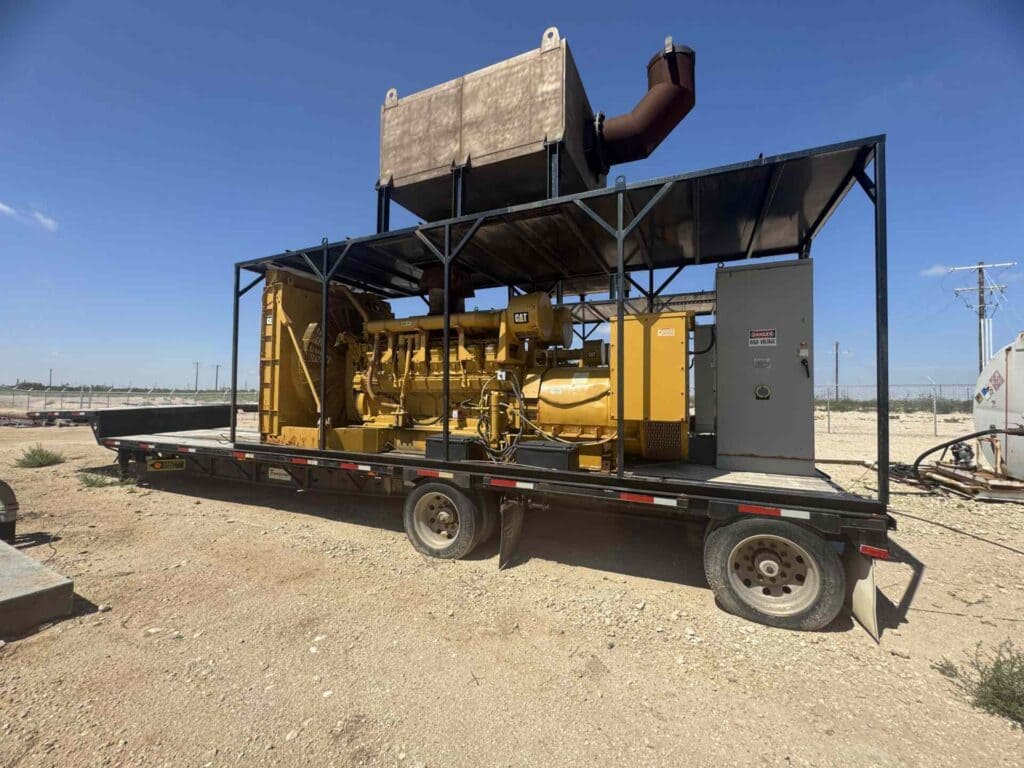
If grid conditions become unstable or a planned shutdown is scheduled, a single generator that will carry a substantial portion of the site’s power load is preferred over multiple smaller machines. In these situations, a 1750 kW generator will deliver high output while keeping common industrial distribution voltages and temporary switchgear stable. For sites with slightly lower total demand, a 1500kW diesel generator rental often covers the load just below this tier without the added footprint of the next size class.
A 1750 kW generator is typically used where significant kW demand is expected, where step load acceptance matters, and where downtime risk is treated as a direct production cost. While equipment selection is always driven by site conditions, the performance envelope of high-capacity generators at the 1750 kW level tends to align well with large-scale power solutions used across industrial campuses, mission-critical buildings, and Gulf Coast operations that must remain active during severe weather.
1750 kW Generator Role within High-Capacity Sites
A 1750 kW diesel generator set is commonly rated at 60 Hz in North America, with industrial engine speed typically listed at 1800 rpm. Voltage options are often broad, with a single model line sometimes being offered across low-voltage and medium-voltage configurations, depending on alternator and switchgear selection.
Two rating categories are usually reviewed when planning alternative power sources for an industrial facility. A standby rating is commonly used to rate the runtime of a generator during a utility interruption, with a defined duty cycle. A prime rating is usually used to define a longer runtime or a continuous operation cycle, with load management applied. In manufacturer specifications, a 1750 electrical kilowatt (ekW) standby rating is often paired with a lower prime rating to reflect allowable operating limits.
A single 1750 kW unit can keep much of a facility active and running without complex distribution changes. Where several major feeder lines must be carried, fewer parallel sources may be needed, and fewer synchronization points may be introduced. At the same time, the selection of a generator of this size is rarely justified by capacity alone. The decision to purchase one is usually supported by load composition, motor starting behavior, redundancy targets, and the logistics of fuel and distribution on the site.
Load Profile and Sizing Checks that Prevent Shortfalls
Generator sizing is often discussed as a simple kW number, yet kW alone does not describe how the load behaves. Voltage dip, frequency response, and transient recovery are influenced by step load size, motor inrush, and the presence of non-linear loads that introduce harmonics. In large facilities, the initial restart load can be materially different from the steady-state operating load and will influence the size of the generator purchased.
Several checks are typically applied before a 1750 kW generator is approved as the primary power source for emergency operations. These include:
- Demand and diversity validation to avoid oversizing while retaining restart capacity
- Motor starting kVA review to limit voltage dip during large motor starts
- Power factor and kVA confirmation to protect the alternator limits
- Step load acceptance modeling to account for block load restoration
A conservative sizing margin is often carried in the temporary power plan, particularly where high ambient heat, humidity, or altitude can reduce available output. Redundant capacity targets such as N+1 are commonly applied, with the 1750 kW generator used as a modular building block.
Runtime Fuel Planning and Logistics for 1750 kW Generators
At high output levels, a generator’s runtime is frequently limited by fuel logistics rather than its capability. Diesel consumption increases rapidly as load rises, which affects delivery scheduling, storage volume, and refueling access. This relationship is often illustrated through fuel consumption behavior across engine load factors.
| Load Level | Estimated Diesel Use Per Hour |
|---|---|
| 25% load | 37.5 gal/hr |
| 50% load | 63.2 gal/hr |
| 75% load | 90.7 gal/hr |
| 100% load | 124.2 gal/hr |
Fuel planning typically addresses runtime autonomy, on-site storage methods, refueling procedures, and fuel quality control during extended standby periods. In hurricane-prone regions, autonomy targets are often increased to account for delivery delays and access restrictions.
Voltage Distribution and Switchgear Expectations
Large-scale power systems are commonly built around industrial voltages such as 480V three-phase power systems, which are widely used across commercial and industrial facilities. The structure and behavior of 480V three-phase power systems support efficient delivery of high electrical loads, with transformers applied where voltage conversion is required. The 1750 kW class supports these configurations while allowing flexibility across distribution layouts.
Distribution planning typically verifies fault current limits, grounding methods, voltage regulation, frequency response, and cable sizing so system stability is maintained during load transitions. Power distribution accessories such as cables and transformers are essential components of these systems.
Paralleling Strategies Used with High-Capacity Generators
While a single 1750 kW generator can operate independently, paralleling is often used when redundancy, scalability, or operational flexibility is required. The basic principles of parallel generation allow multiple generator sets to operate on a common electrical system. Synchronization systems manage load sharing and breaker coordination so multiple units operate as a unified source.
Common paralleling drivers include:
- Redundancy targets that require spare capacity
- Load growth planning through modular expansion
- Operational efficiency during variable load periods
Using larger generator modules can reduce the number of parallel units required, which simplifies cabling, layout, and operational coordination on temporary sites.
Reliability Practices During Outages and Planned Shutdowns
Reliability is achieved through commissioning discipline and operational control. Load bank testing, connection inspections, documented restart sequencing, and scheduled inspections are commonly applied to maintain predictable performance.
Temporary power systems are often treated as parallel utilities during planned shutdowns, with written switching procedures and assigned operating authority to reduce risk during transitions.
Stag Power Rentals Supports Houston’s Gulf Coast with Large-Scale Generator Rentals
Large operations across Houston and surrounding Gulf Coast communities often rely on diesel generator rentals ranging from 20 kW through 2000 kW to support maintenance, emergency response, and continuous industrial demand. When a 1750 kW generator is selected, fast mobilization and properly matched distribution support are typically required.
Stag Power Rentals supports commercial and industrial projects throughout the Houston area and the Gulf Coast with diesel generator rentals up to 2000 kW. Temporary power systems are supported with services and accessories that are commonly requested on high-load sites, including:
- Wide capacity coverage from 20 kW through 2000 kW diesel generator rentals
- Rapid dispatch planning aligned with outage response and scheduled shutdown windows
- Contingency rental plans built around storm season and operational continuity needs
- Flexible rental structures that can match single shift, double shift, or triple shift schedules
- Power distribution accessories such as cables, transformers, and jobsite power components
- Controlled deployment support so that startup, operation, and demobilization are managed as a defined process
If you need a high-capacity, 1750 kW generator to enhance your large-scale power plan, contact us today for a quote. Our experienced technicians will help you find the right equipment and distribution approach to align with your site requirements.
