
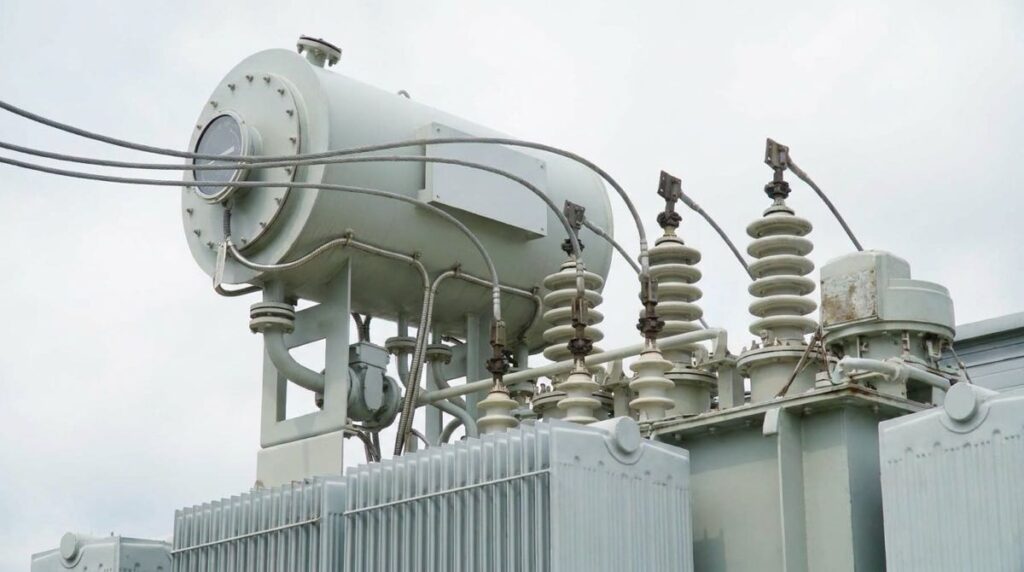
Inside a 480V-to-13.2kV Step-Up Transformer Setup
A step-up transformer looks simple from the outside: a box between the generator and the load. What it is actually doing, and why it has to be sized and wired correctly, matters more once the equipment is on site and energized. Most rental diesel generators produce 480V, and the transformer is what carries that output up to the voltage a medium-voltage job actually requires.
Two Windings, One Job
At the core of the transformer are two sets of windings, primary and secondary, wrapped around a shared magnetic core. The primary side connects to the generator at 480V. The secondary side delivers the higher voltage, 13.2 kV in this case, to the load. No electrical connection exists between the two sides. The voltage transfer happens entirely through the magnetic field induced in the core, which is why a transformer can step voltage up without any moving parts or physical link between input and output.
The ratio between the number of turns in the primary winding and the number of turns in the secondary winding determines the voltage change. More turns on the secondary side than the primary produces a step-up. The same transformer wired the opposite direction, more turns on the primary, would step voltage down instead. NFPA 70E, the standard governing electrical safety in the workplace, treats equipment on either side of that ratio differently once voltage climbs past 600 volts, which is a distinction worth keeping in mind before the rest of the installation gets planned.
What Happens to Amperage Along the Way
Voltage and amperage move in opposite directions across a transformer. As voltage steps up from 480V to 13.2 kV, amperage steps down by roughly the same ratio on the secondary side. This is not a design choice. It follows directly from the fact that a transformer conserves power, not current, across the primary and secondary windings.
In practical terms, a generator producing several hundred amps at 480V might deliver only 30 to 40 amps at 13.2 kV on the far side of the transformer, depending on the exact load. Anyone specifying cable, breakers, or switchgear for the secondary side needs to size for the reduced amperage at the higher voltage, not the primary-side numbers. Cross-referencing both figures against an amperage chart before equipment ships is a useful way to catch a mismatch between the primary and secondary side before it becomes a field problem.
This inverse relationship is also why the primary-side cabling and connections, between the generator and the transformer, carry a much higher current than anything on the secondary side. That primary run needs cable sized for the full generator output, even though the final delivered current at 13.2 kV is a fraction of that number.
Sizing the Transformer to the Job, Not Just the Generator
A transformer has to be rated for the actual load it will carry, not simply matched to the generator’s total output. Oversizing wastes money and adds unnecessary weight and footprint to the skid. Undersizing risks overheating the windings or failing to deliver the voltage the load requires once real equipment starts pulling current.
Getting this right means working from the same load data used to size the generator in the first place: voltage, amperage, and power factor on the load side. A generator sizing calculator can help establish the baseline kilowatt figure, and that same number should drive the transformer selection alongside the generator selection, not as an afterthought once the generator is already chosen.
Transformer capacity is typically expressed in kVA rather than kW, which accounts for the fact that a transformer has to handle apparent power, not just the real power the load ultimately uses. That distinction matters when comparing a transformer’s nameplate rating against a generator’s kW output, since the two numbers are not measuring quite the same thing and a direct comparison can understate what the transformer actually needs to carry.
Grounding and Safety Considerations
Medium-voltage equipment carries different safety requirements than standard 480V gear, including specific rules around arc flash protection, grounding, and clearance distances once equipment crosses above 600 volts. A 13.2 kV transformer and its associated cabling fall well within that higher-voltage category, which means the installation, grounding, and access controls around it need to reflect that risk level rather than being treated the same as a standard 480V generator hookup.
Grounding in particular deserves attention on temporary installations. A permanent facility transformer typically ties into an established grounding system that has been engineered and tested over years of service. A rental transformer arriving for a temporary job has no such history to lean on. Its grounding has to be verified on site, checked against the specific soil and site conditions, and confirmed before the equipment gets energized, since there is no existing infrastructure to rely on the way a permanent installation would have.
Skid-Mounted Setups Reduce Field Wiring
Many rental providers mount the generator and step-up transformer together on a single skid rather than shipping them as separate pieces of equipment. That reduces the amount of medium-voltage cabling that has to be run and terminated on site, which is where much of the installation time and risk concentrates on these jobs. A pre-wired skid also means the primary-side connections between generator and transformer are tested and verified before the equipment ever leaves the yard.
For facilities in manufacturing and heavy industrial environments where medium-voltage distribution is already part of the plant infrastructure, a combined skid package tends to integrate more easily with existing switchgear than separately sourced components would.
Getting the Setup Right the First Time
A step-up transformer is not complicated in concept, but the sizing, grounding, and cabling decisions around it carry real consequences if they are handled incorrectly. Working through the load data before equipment ships, rather than adjusting after installation, is what keeps a 480V-to-13.2kV setup running the way it is supposed to.
If you are planning a project that needs a step-up transformer paired with a rental generator, Stag Power Rentals can help work through the sizing and setup details before the equipment is scheduled. Request a quote to get started.
